From Saving to Investing
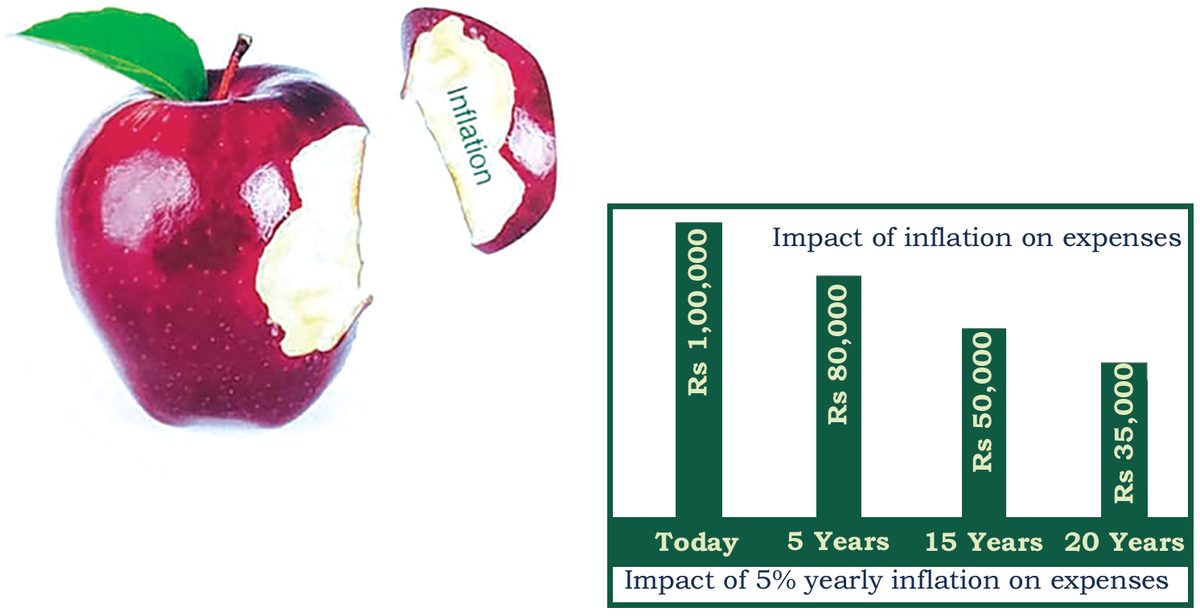
Bonigala Solomon Similarly, Rs. 1,00,000 saved today may effectively shrink in value over time:
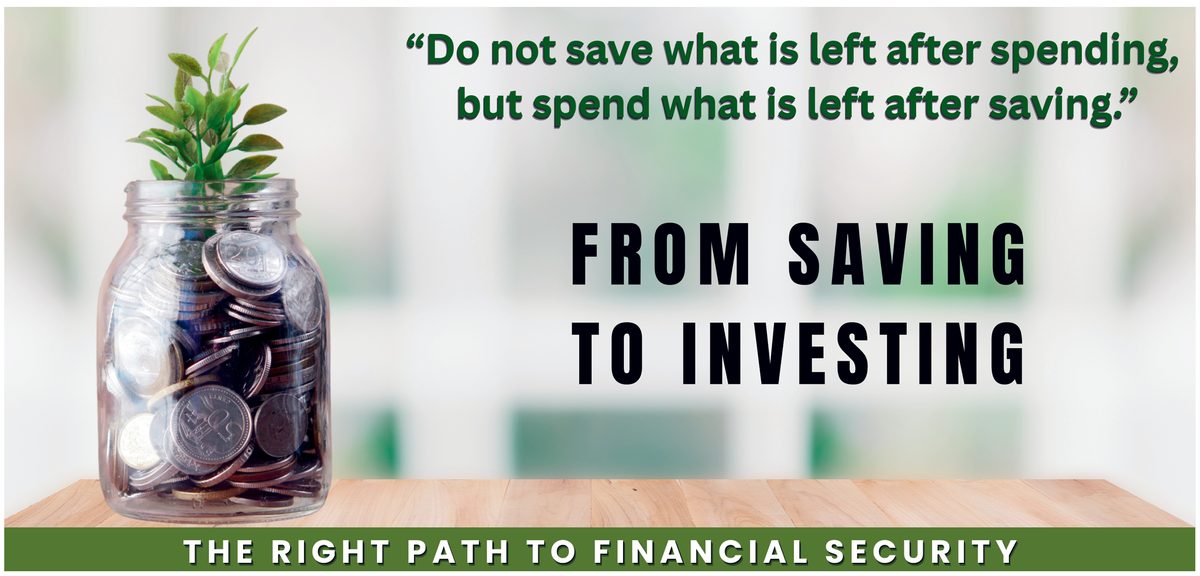
As Warren Buffett wisely said: “Do not save what is left after spending, but spend what is left after saving.” This timeless principle aligns closely with biblical stewardship. The Bible teaches us to live with foresight and discipline: “ The plans of the diligent lead surely to abundance ” (Proverbs 21:5). Saving, therefore, is not merely a financial habit—it is a responsibility.
Saving: A Foundation of Wisdom
Saving is an act of prudence. Scripture commends preparation: “ Go to the ant… it stores its provisions in summer and gathers its food at harvest ” (Proverbs 6:6–8).
Savings provide stability and security. They are generally low-risk and offer assured returns. Common saving instruments include:
• Bank Fixed Deposits (FDs) • Recurring Deposits (RDs) • Endowment Insurance Policies • Sukanya Samriddhi Yojana • Post Office Savings Schemes
These are important tools for preserving wealth. But an important question arises: Is Saving Alone Enough? The honest answer is no.
The Silent Challenge: Inflation
While saving is essential, it is not sufficient for long-term financial security. The primary reason is inflation—the silent force that reduces the value of money over time. Inflation reduces the value of money over time. What we save today may not meet tomorrow’s needs.
Understanding Inflation:
Inflation gradually erodes purchasing power. What we can afford today may cost significantly more in the future.
For example, goods worth Rs. 30,000 today may cost:
• Rs. 40,000 after 5 years • Rs. 60,000 after 15 years • Rs. 80,000 after 20 years (assuming an average inflation rate of 5%)
• Rs. 80,000 after 5 years • Rs. 50,000 after 15 years • Rs. 30,000 after 20 years
This shows that saving alone cannot preserve wealth—it must grow.
A Kingdom Principle: Multiplication
In the Parable of the Talents (Matthew 25:14–30), Jesus Christ teaches that resources entrusted to us are meant to grow. The servants who invested were commended: “ Well done, good and faithful servant! ” But the one who merely preserved what he had was rebuked.
The lesson is clear: God expects not only preservation, but multiplication through wisdom.
From Saving to Investing
The solution to inflation is simple: Do not remain only a saver—become an investor. Investing allows your money to grow and outpace inflation.
Key Financial Principles
1. Start Early: The earlier you begin, the greater the benefit. Time is one of the greatest assets in wealth creation.
2. Let Your Money Work for You: You work hard to earn money. Investing allows your money to work for you through the power of compounding.
3. Invest with Purpose: Every investment should be goal-oriented. Common financial goals include:\
• Emergency preparedness • Children’s education • Home ownership • Retirement planning • Supporting ministry and charitable work
When guided by purpose, money becomes a tool for both provision and blessing others.
Investment Options
There are several avenues for investment:
• Gold • Stocks (Equity) • Bonds • Property • Insurance • Bank and Post Office Deposits • Mutual Funds
Each comes with varying levels of risk and return.
• Deposits and insurance offer safety but lower returns.
• Gold generally keeps pace with inflation.
• Property can generate rental income and long-term appreciation.
• Equity investments offer higher growth potential but involve risk.
For many individuals, especially those with limited time or market knowledge, mutual funds provide a practical investment option.
Mutual funds pool money from investors and invest in assets such as stocks and bonds, managed by professional fund managers.
• Start with small amounts • Professional management • Diversification of risk • Potential for market-linked growth
While returns are not guaranteed, history shows that long-term investments in equity markets have often outperformed traditional savings instruments.
The Power of Compounding
A useful concept in investing is the Rule of 72:
If your investment earns 12% annually, it doubles in:
This demonstrates how consistent investing over time can lead to significant growth.
A Balanced Approach
Christian stewardship calls for both wisdom and faith. Saving provides safety; investing enables growth.
We are not called to reckless risk, but to prayerful, informed, and disciplined financial decisions.
Conclusion
Begin with saving—but do not stop there. Progress toward investing with wisdom and purpose. When managed well, financial resources can:
• Support your family • Secure your future • Enable generosity • Advance God’s work
Let us be faithful stewards, using what God has given not only to preserve— but to multiply for His glory.
Bonigala Solomon ARN-116481 | APRN06391 AMFI Registered Mutual Fund Distributor, APMI Registered PMS Distributor Mobile: 8790492910